
 EN
EN
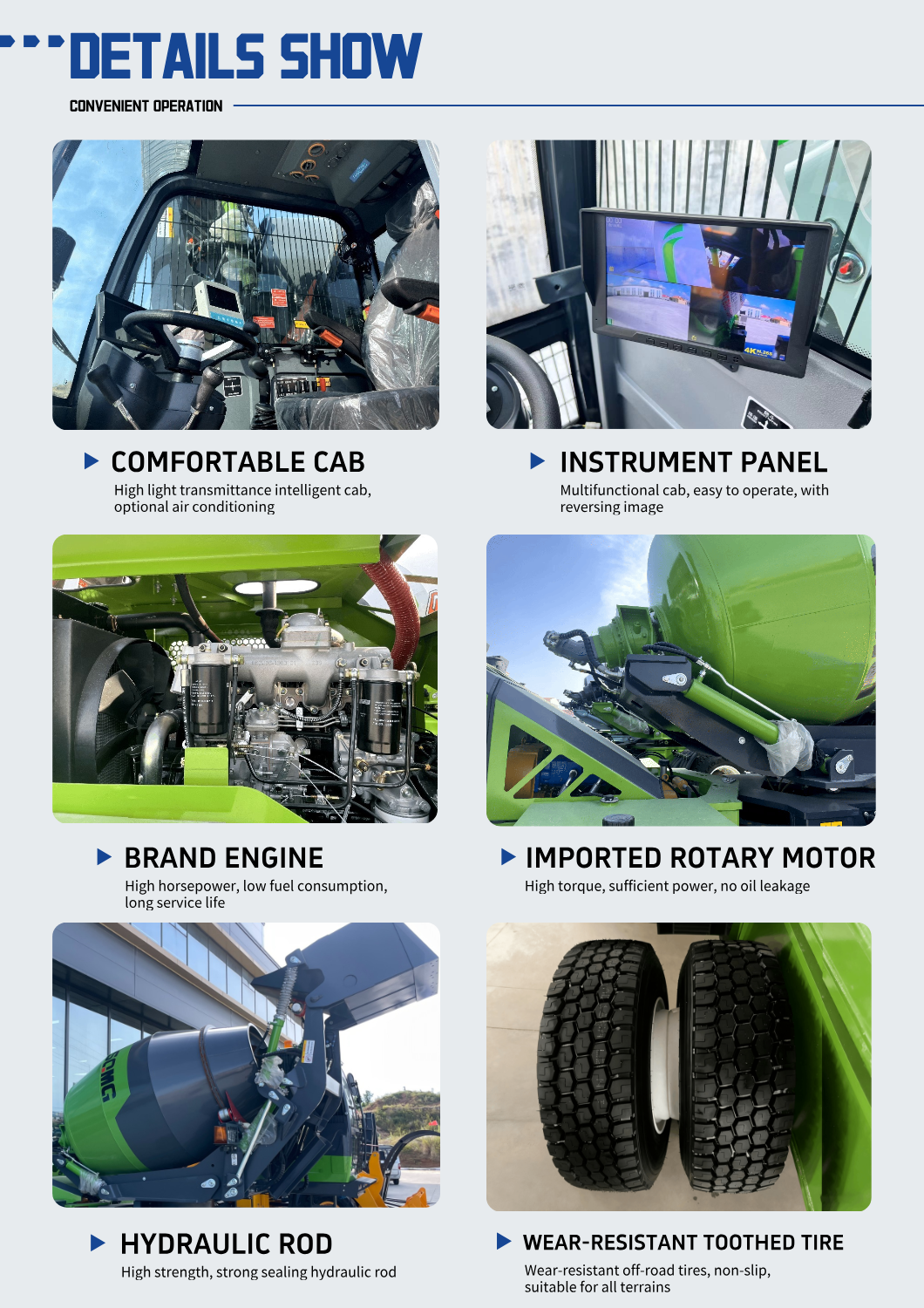
Understanding the SelfLoading Mixer Truck: Core Features and Advantages
Self loading mixer trucks combine the whole process of batching, mixing and transporting concrete all within one mobile machine. This means construction crews don't have to set up separate batching plants when working at remote locations or tight job sites. The trucks come equipped with automatic systems that accurately weigh out the different ingredients needed for concrete mixtures. At the same time, the big rotating drum is powered hydraulically and spins around between 210 to 260 revolutions per minute to keep everything mixed properly without segregation. What makes these vehicles particularly useful is their small size combined with special steering mechanisms. They can actually operate in areas where space is really limited sometimes down to just eight feet wide! That's why we see them so often during city renovation work or building roads through mountainous terrain where regular equipment simply wouldn't fit.
Key advantages include:
- 67% faster setup than traditional concrete delivery methods
- 40–60% labor reduction through automated material handling
- Ability to produce 4.5–9 m³ of ready-mix concrete per cycle
Integrated Loading Systems: Key Benefits for On-Site Efficiency
Front mounted loading shovels paired with conveyor systems let workers batch materials straight from ground stockpiles without needing extra loaders around. Better versions of these systems actually control when water gets injected along with the aggregate feed through those PLC controllers we all know about. The result? Moisture levels stay pretty consistent within about 1.5 percent either way, which makes a real difference in getting that right slump consistency everyone wants. What's even better is how this whole closed loop process cuts down on wasted time between batches. We're talking roughly 82 percent less downtime compared to old school manual mixing methods. Plus, everything still checks out according to ASTM C94 requirements so there's no worry about regulatory issues popping up later on.
Mobility, Adaptability, and Field Performance in Diverse Conditions
Self-loading mixers equipped with four-wheel drive and 35 degree approach angles can handle muddy ground and slopes as steep as 30 percent, something regular drum trucks just cant manage. Field testing across various mines in Scandinavia showed these machines maintained operation around 98 percent of the time even when temperatures dropped to minus 25 degrees Celsius. This reliability comes from special heated hydraulic systems and insulated mixing areas that keep everything working properly in cold conditions. The vehicles also offer dual fuel capability running on either diesel or LNG, giving them range between 450 and 600 kilometers. Because of this flexibility, they work great for big wind farm construction sites and long distance highway maintenance jobs where getting equipment to remote locations is a challenge.
Operational Efficiency and Productivity Gains
Automated Control Systems and Their Impact on Job Site Efficiency
Self loading mixer trucks these days come equipped with automated controls that cut down on the need for hands on work, which means fewer mistakes happening during operations something around 40% less according to Better Engineering from last year. The automation handles when materials get loaded into the truck, manages how long things mix together, and tells when it's time to dump everything out. This coordination saves time too projects finish about 15 to 20% quicker than they would if workers had to do everything manually. Operators also benefit from real time dashboards showing what's going on inside the machine. If there's a problem like the mix isn't coming together properly or the engine starts working harder than normal, the crew gets warned right away. This early warning system stops expensive fixes later on and keeps equipment running without unexpected breakdowns that delay schedules.
Drum Capacity, Output Rates, and Site Flexibility Evaluation
The 6 cubic meter drum setup strikes just the right balance between being able to move around easily while still getting good results, typically handling between 35 to 50 cubic meters of concrete per day no matter what kind of ground they're working on. When it comes to bigger jobs, those 8 to 10 cubic meter units definitely pump out more concrete for large scale infrastructure projects, though contractors need to plan their routes really carefully beforehand. Looking at some bridge construction work from last year showed something interesting too. Trucks equipped with adjustable drum speeds kept the concrete mix at about 98% quality level even when climbing steep hills, which beats the pants off regular fixed speed models that can't handle such conditions as well.
Case Study: Boosting Productivity on Remote Construction Sites
During a recent highway expansion through rugged mountain terrain, crews started using self-loading mixer trucks which cut down on their dependence on fixed batching stations. Material transport expenses dropped around $18k each month because workers no longer had to haul empty trucks back and forth. Daily concrete pours jumped from just 14 to 22 after eliminating those round trips to centralized mixing facilities, representing nearly a 60% boost in productivity according to industry benchmark reports. What really made these trucks stand out was their four wheel drive capability that kept operations moving even when rain turned roads into mud traps. Because of this advantage, the entire road construction wrapped up eleven weeks earlier than originally planned despite several unexpected storms during peak season.
Build Quality, Durability, and Long-Term Reliability
Engineering and Materials Behind Durable Self-Loading Mixer Trucks
Manufacturers who want their products to last for years typically rely on precision engineering combined with top quality materials. Many build critical parts such as drums and chassis from high strength steel alloys, while special welding techniques help spread out stress points across those important joints. For protection against harsh conditions, corrosion resistant coatings are applied to hydraulic systems exposed to both abrasive substances and constant moisture. Studies looking at how durable construction equipment really is show something interesting: machines built with these advanced metals and composite materials tend to have around 30 percent fewer problems related to metal fatigue after being used continuously for ten whole years, when compared to older standard models still on the market today.
Field-Tested Performance Under Extreme Operating Conditions
The best self loading mixer trucks get put through their paces for over 2000 hours in some pretty extreme conditions. We're talking about temperatures as low as minus 30 degrees Celsius in the Arctic and scorching hot deserts where it hits 55 degrees. These machines are built tough. The planetary gearboxes keep working even when climbing steep slopes at 25% grade. And those drum bearings? They hold up against massive 8 ton loads without warping or bending. Some independent research has found that mixer trucks with multi stage filters stay running at around 98% efficiency even when dust levels are through the roof. That's way better than older models which need constant maintenance breaks because they just can't handle the dirt and grime.
Concrete Quality and Mixing Consistency Technology
Advanced Mixing Drums and Uniform Concrete Output
Modern self-loading mixer trucks utilize helical drum designs with optimized flight angles to achieve 98% ingredient integration within 70–90 revolutions (Mechanical Engineering Review 2024). These systems automatically adjust rotational speed based on concrete grade requirements, ensuring uniformity and preventing segregation. Key innovations include:
| Feature | Benefit | Impact on Quality |
|---|---|---|
| Variable-speed motors | Precise viscosity control | Eliminates clumping/stratification |
| Wear-resistant liners | Consistent mixing performance over time | Maintains mix integrity â¥5,000 cycles |
| Water-jet cleaning | Cross-contamination prevention | Guarantees batch-to-batch purity |
According to the 2024 Mixer Technology Report, these advancements reduce concrete waste by 22% compared to conventional drum designs.
Consistent Mix Quality Across Variable Batch Sizes
The modular batch scaling tech lets manufacturers handle volumes ranging between quarter cubic meter all the way up to six cubic meters without messing up those slump tests either the plus or minus five millimeter tolerance remains intact. When dealing with aggregates that vary by as much as three percent moisture content, our system automatically tweaks the water levels through built-in sensors so everything stays on track. Real world testing has shown pretty impressive results too consistent compressive strength readings stay within roughly three megapascals difference even after running over a thousand different batches according to what we saw published in the ACI Materials Journal last year.
Smart Monitoring and Operator Support Through Automation
Integrated IoT platforms provide real-time alerts for temperature deviations exceeding ±2°C, mix duration thresholds (â¥1% over/undermixing), and early signs of drum wear. These systems reduced quality-related rework by 38% in bridge construction projects according to a recent case study. Automatic data logging generates AS 1379-compliant batch reports, simplifying compliance audits.
Innovation, Serviceability, and Total Ownership Value
Leading manufacturers now incorporate smart controls and IoT diagnostics, reducing troubleshooting time by 30% compared to conventional models (Construction Tech Report 2024). Real-time performance monitoring allows for predictive maintenance, and vendors investing in R&D and AI capabilities can identify potential failures before they occur.
Electrification is transforming the sector, with hybrid powertrain prototypes demonstrating 40% lower fuel consumption. Early trials of autonomous operation on remote sites use GPS-guided routing to optimize delivery paths while preserving slump consistency.
Global service networks distinguish premium brandsâoperators with access to localized parts depots report 67% faster repair turnarounds. This logistical advantage directly impacts project timelines, as delayed mixer repairs cost construction firms an average of $18,200 per day in penalties (Global Construction Efficiency Study 2023).
When evaluating total ownership costs, forward-thinking buyers consider resale value alongside purchase price. Industry data shows that operators focusing on total cost of ownership metrics achieve 18% higher ROI over five years, factoring in energy efficiency gains and warranty-covered component longevity.
FAQs About Self-Loading Mixer Trucks
What are self-loading mixer trucks?
Self-loading mixer trucks combine the processes of batching, mixing, and transporting concrete into one mobile unit, allowing construction teams to efficiently manage concrete work in limited spaces and remote areas.
What advantages do they offer?
They provide a quicker setup, reduced labor requirements, and deliver ready-mix concrete directly on-site, minimizing transportation and material handling costs.
How do self-loading mixer trucks ensure concrete quality?
These trucks are equipped with advanced technologies for consistent mixing, including helical drum designs and variable-speed motors, which help maintain ingredient integration and prevent segregation.
Are self-loading mixer trucks suitable for extreme conditions?
Yes, their durable build and heated systems allow them to operate efficiently in temperatures ranging from minus 30 degrees Celsius to 55 degrees.
Table of Contents
- Understanding the SelfLoading Mixer Truck: Core Features and Advantages
- Integrated Loading Systems: Key Benefits for On-Site Efficiency
- Mobility, Adaptability, and Field Performance in Diverse Conditions
- Operational Efficiency and Productivity Gains
- Build Quality, Durability, and Long-Term Reliability
- Concrete Quality and Mixing Consistency Technology
- Innovation, Serviceability, and Total Ownership Value
- FAQs About Self-Loading Mixer Trucks